Solar is the trade we came from.
YumaOS works for anyone who sells and installs. In solar it goes deeper, because that is where it was born: inside a company installing over 300 systems a year that needed these tools before selling them to anyone else.
The things a generic system cannot do.
Any CRM handles contacts and appointments. These are the things you need when you put panels on a roof, and no generic software has them.
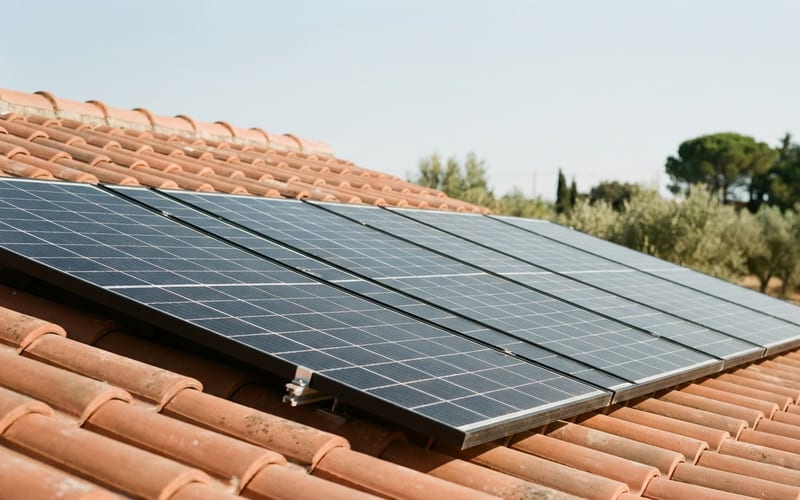
Panels drawn on the customer's roof
Open the satellite view, draw the roof outline and the system lays out the modules by itself. Power, annual yield and savings update as you move the rows. The quote comes straight out of it, with nothing retyped.
GSE, Terna and grid operator paperwork
Forms arrive pre-filled with the system data already in the project. Deadlines, required documents and application status stay visible to everyone working on the job.
The single-line electrical diagram
The diagram is generated from the system configuration, in the format the grid operator expects. No drawing it by hand for every application.
Site visit, installation, commissioning
Android field app: site-visit checklist, installation photos, on-site customer signature, commissioning tests. All synced with the back office, even with no signal.
From the first call to the fifth-year service visit.
The value isn't in any single tool: it's that the customer never leaves the system. Every step picks up the data from the one before.
01 / 06
The lead
Leads from Facebook, Google, your site or word of mouth, all in one pipeline. The AI voice assistant answers the phone when you can't.
02 / 06
The site visit
Guided checklist in the app, photos of the roof and the panel board, measurements and constraints recorded on the spot.
03 / 06
The quote
Energy bill, panels simulated on the roof, products from your price list, summary. Branded PDF, ready in ten minutes.
04 / 06
The signature
The customer signs remotely, with digital ID or through your sales rep. On signing, the project is created automatically with the site tasks already planned.
05 / 06
The installation
Job site management, work photos, labour tracking, commissioning and final documentation.
06 / 06
Afterwards
Scheduled maintenance and service calls. The customer is still yours a year later.
One company rarely builds a whole system.
Whoever sells the system seldom also handles design, grid connection and paperwork. In the marketplace a request is split into packages by category: each package has its own winner, and the team that forms works on the same project even when the companies are different.
Design
Sizing, module layout, technical report, single-line diagram.
Supply
Modules, inverters, batteries, mounting and accessories, delivered to site.
Installation
Mounting structures and modules, cabling, boards, making it safe.
Grid connection
Connection application to the grid operator, meter, activation.
Paperwork
GSE, Terna, tax deductions, filings with the authorities.
Maintenance
Scheduled checks, module cleaning, warranty work.
Three companies, three ways of selling systems.
These aren't accounts won by a sales team: they are the companies YumaOS was built with, each with a different problem.
Residential and industrial
Sale and installation of energy efficiency solutions and solar systems. This is the company YumaOS was born inside, and the one that has used it longest.
+300
installations per year
Third-party work
Solar and thermal installation on behalf of other companies in the energy industry. Uses YumaOS for the jobs its commercial partners pass on.
Third-party
jobs from partner companies
Large surfaces
Free-loan systems on industrial warehouses and large commercial roofs. Long projects with many stakeholders: the kind of work where a spreadsheet gives up.
Free loan
on warehouses and large surfaces
What solar companies ask us.
Is YumaOS only for solar?
No. The quoting engine is generic and configures around your catalogue, so companies in HVAC and in windows and doors use it too. In solar it simply goes deeper: panel simulation, GSE paperwork, single-line diagram. Those things aren't needed in the other sectors.
How does the panel simulation work?
Inside the quote wizard you open the satellite view of the customer's address, draw the roof outline and the system lays out the modules respecting spacing and orientation. You can move them by hand. Power, estimated yield and savings recalculate immediately and flow into the quote with nothing retyped.
Which GSE procedures are integrated?
The workflows cover the most common procedures (Scambio sul Posto, Ritiro Dedicato, RID), with fields pre-filled from the system data already in the project. Available on the Business tier.
Is the electrical diagram accepted by the grid operator?
The single-line diagram is generated in the format required for connection applications, in Italian, from the system configuration. It remains a document that a qualified engineer reviews and signs.
Does it work on large systems too?
Yes. Sargreen uses it on industrial warehouses and large commercial roofs, with long projects and many stakeholders. The geometry editor handles complex layouts and multiple roof faces.
Can I bring the data I already have?
Yes. We import customer records, quotes and projects from the most common systems and from spreadsheets. If you're coming from a generic CRM, we handle the move with you.
Use it for your quotes, from March 2027.
Join the waiting list: we'll let you know as soon as YumaOS is available.